
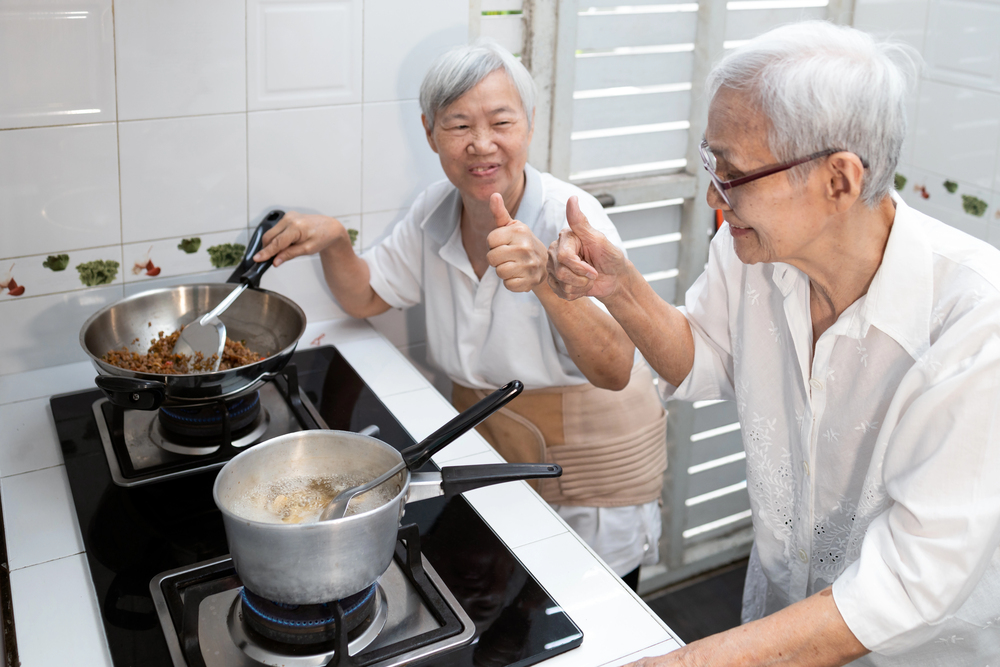
Have you heard of the word “Agak-agak”? or have your grandmother or mother ever said to you… oh I don’t know the exact proportion, just “agak-agak” lah!
If you Google the word Agak-Agak… It is summarised as a “colloquial phrase, most commonly used in Singaporean (Singlish) and Malaysian (Manglish) contexts, that roughly translates to “estimate” or “guess” or “guesstimate”.
The agak agak method of cooking is commonly, or I would say deeply rooted in the cooking traditions of our mothers and grandmothers, which is to estimate the approximate measurement or judgement of the ingredients for a particular dish.
It means there is no strict measurement of the ingredients used to cook a particular dish. They estimate the quantity of ingredients that is required for that dish based on their preferences through sense, sight, feel, taste, and the sound of the dish cooking in the pot/wok – in other words, based on their intuition.
Why the agak-agak method?
This is because, during our grandmothers’ days in the kitchen, there were no proper recipe books in place to guide them. Their cooking experiences were passed down from the teachings of their aunties, mother, grandmothers, relatives, families and friends, and each has their own version of the recipes. So, at most times, it is up to the ‘cook’ to recreate the dish based on their own version – how they like it to taste and look.
For example, to cook a curry chicken dish, to start the process is to add the oil to the wok, once the oil is heated / is hot, add the “rempah” (paste) and fry until fragrant, then add the meat, stir fry a bit, add water and simmer.
So, the questions would be:
- How much oil to use?
- How hot would the oil need to be before adding the rempah?
- What does it mean until ‘fragrant’?
- How much water to add?
- How long do you need to simmer the meat for?
All the above questions are based on the cook’s judgement; so long as the dish is not burnt and the taste is what the dish is supposed to be.
The aga-agak method would be:
Use your judgement and “agak-agak lah” if you want the dish to be oilier, add one ladle of oil, otherwise reduce the quantity of oil.
As for the fragrance of the rempah – use your nose to smell – is it aromatic enough? Also use your eyes to determine whether the paste / rempah has changed colour? How’s the concentration of the rempah?
As for water, if you see the liquid is drying up, just lower the flame; otherwise add more water and continue to simmer.
Basically, it tells you to use your senses to guide you through the process! To gauge the aroma of the dish, the proportion of the spices cooking together in harmony, the heat of the pot/fire is well controlled, as well as listening to the sizzling of the” rempah” to determine whether sufficient oil has been added is key. And taste test the dish as you tweak along, and finally, making sure the dish turns out to be as you expected.
Cooking through the agak-agak method is truly a skill honed over the years – to be instinctive enough to feel through all the senses and to trust the gut to guide you on how the dish should be cooked and understand how ingredients interact with the dish.
How are your cooking skills? Do you cook by instinct and tweak the ingredients to suit your taste bud and the texture to your liking?
Whichever way you cook, as long you enjoy the process and the dish turns up the way you would like it to be… that’s a SUCCESS! Agak-agak method or not!!



Leave A Comment